In CLL patients who progressed while on a BTKi, up to ~80% (14-83%) had a BTK ± PLCG2 mutation present1-6
IN PATIENTS WHO PROGRESSED ON A BTKi1:
- .
- .
- .
- .
- .
.
~20%
no mutations
(wild-type BTK/PLCG2)
<10%
PLCG2 mutation
20%-30%
BTK and PLCG2 mutation
~50%
BTK mutation
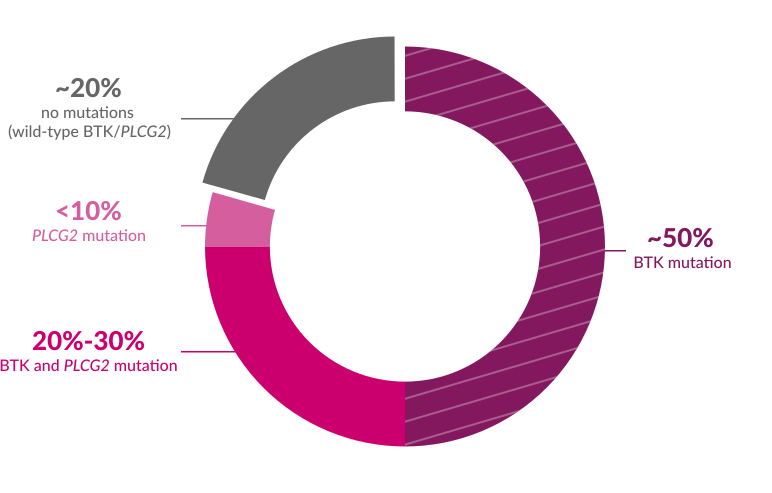
Image adapted from Ahn IE, Brown JR. Front Immunol. 2021;12:687458.
- Of the patients participating in clinical trials who were reported to have ≥1 BTK mutation (sample size ranged from 6-57), C481S was the most common mutation in patients who progressed on a BTKi2-5
BTK mutations may be classified as either kinase-proficient or kinase-dead7
Kinase proficient
c481s
t474i
Kinase-proficient mutations maintain the enzymatic activity of the BTK, which may help continue function of BTKis7,8
Kinase dead
l528w
a428d
Kinase-dead mutations may reduce the enzymatic activity of the BTK, but retain downstream signaling of the B-cell receptor by bypassing the BTK7,9
- BTK mutations may alter the kinase domain, impeding the ability of BTKis to bind to the kinase1
Preclinical Studies
Kinase-dead mutations may have reduced kinase activity compared to BTK wild type in preclinical studies7
KINASE ACTIVITY OF SELECT
KINASE-PROFICIENT VS KINASE-DEAD
MUTATIONS VS BTK WILD TYPE
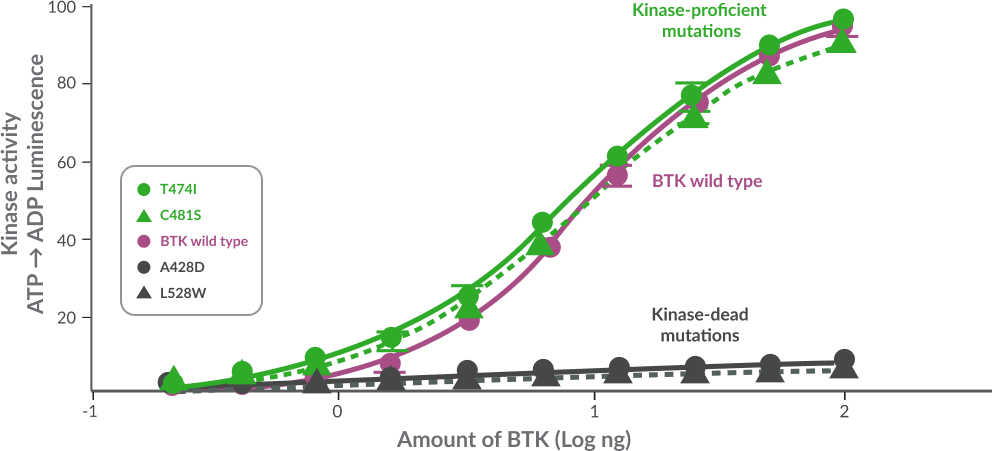
Image adapted from Montoya S, Bourcier J, Thompson MC, et al. Blood. 2022;140(Suppl 1):1811-1813.
Kinase activity MAY BE SUBSTANTIALLY reduced with kinase-dead mutations7
Preclinical Studies
Kinase-dead mutations such as L528W and A428D may prevent BTKis from blocking BTK enzymatic activity8
CHOOSE MUTATION
- BCR Signaling pathway
- Kinase-dead mutation
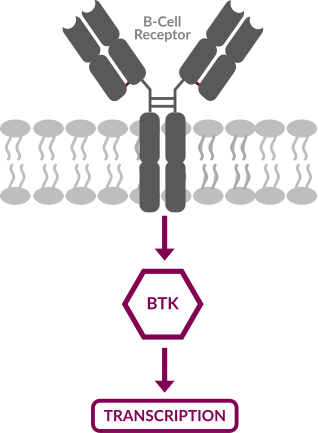
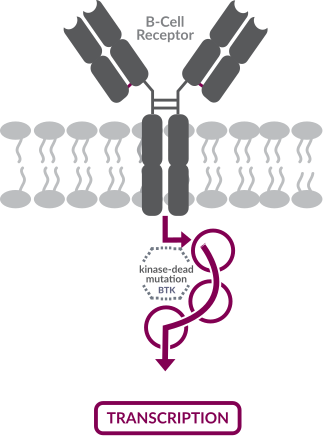
Images adapted from Ahn IE, Brown JR. Front Immunol. 2021;12:687458. Images are schematic representations of possible BCR signaling pathways.
BCR signaling may bypass
BTK activity in the case of
kinase-dead mutated BTK7,9
Preclinical Studies
Related Resources
Preclinical Studies
Related Resources
AstraZeneca is committed to better understanding the science of mutations
Sign up to learn more



The clinical significance of the presence or absence of BTK mutations has not been established. Information on BTK mutations does not imply any clinical safety or efficacy aspects related to BTK inhibitors.